
Types of Tilak in Sanatan Dharma Based on Material
By MySanskruti on 03 Mar, 2026

In Sanatan Dharma, a tilak is not a decorative mark or social identity. It is a spiritual symbol that reflects inner belief, discipline, and devotion. One of the most meaningful ways to understand tilak is by the material used to apply it. Each material carries a distinct spiritual vibration and philosophical message.
This blog explains the five main types of tilak based on material, their deeper meaning, and their spiritual relevance.
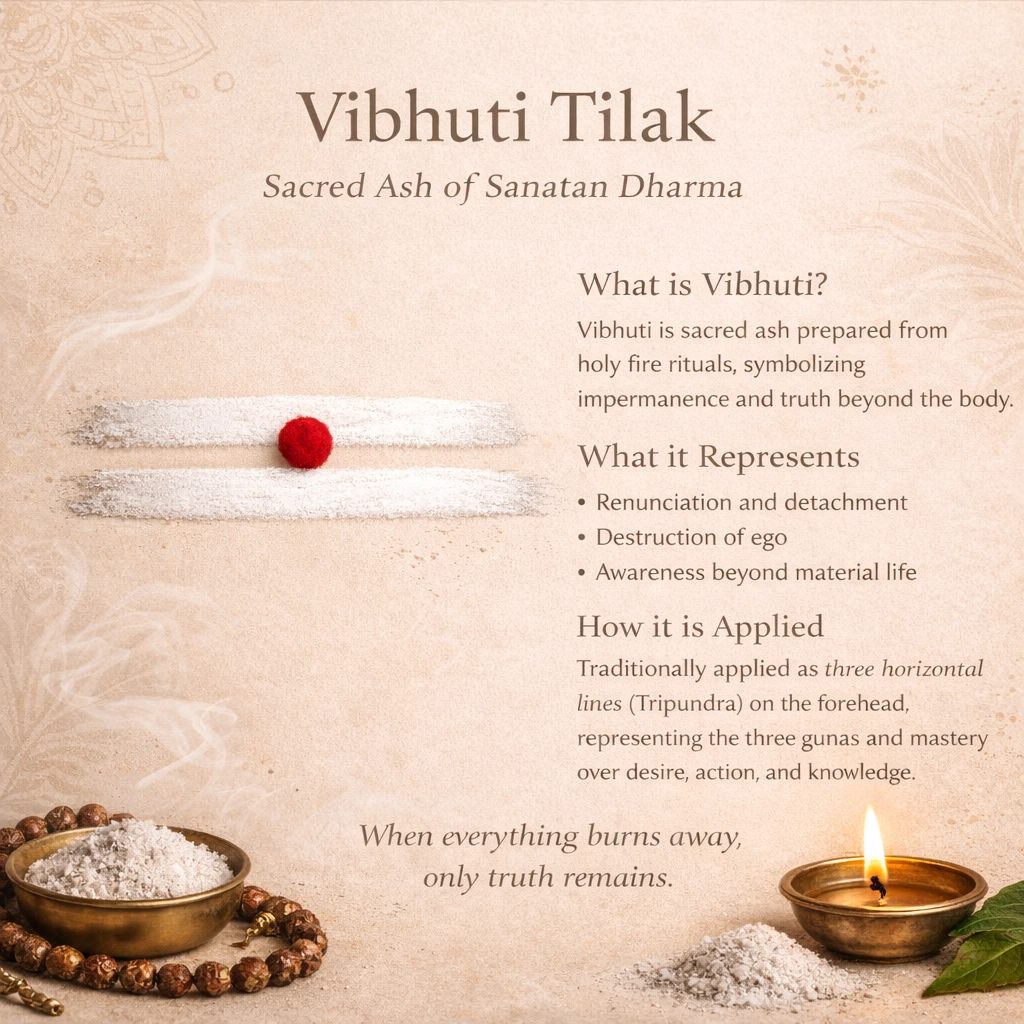
1. Vibhuti Tilak – Sacred Ash of Renunciation
Vibhuti is sacred ash traditionally obtained from ritual fire ceremonies. It is closely associated with Shaiva traditions and devotees of Lord Shiva.
Vibhuti tilak serves as a reminder that everything material eventually turns to ash. It teaches detachment from ego, pride, and temporary pleasures. Spiritually, it symbolizes acceptance of life’s impermanence and focus on higher truth.
Ash represents what remains after destruction, signifying pure consciousness beyond illusion. Wearing vibhuti reflects a mindset of renunciation while living a balanced worldly life.
2. Bhasma Tilak – Ash of Knowledge and Inner Fire
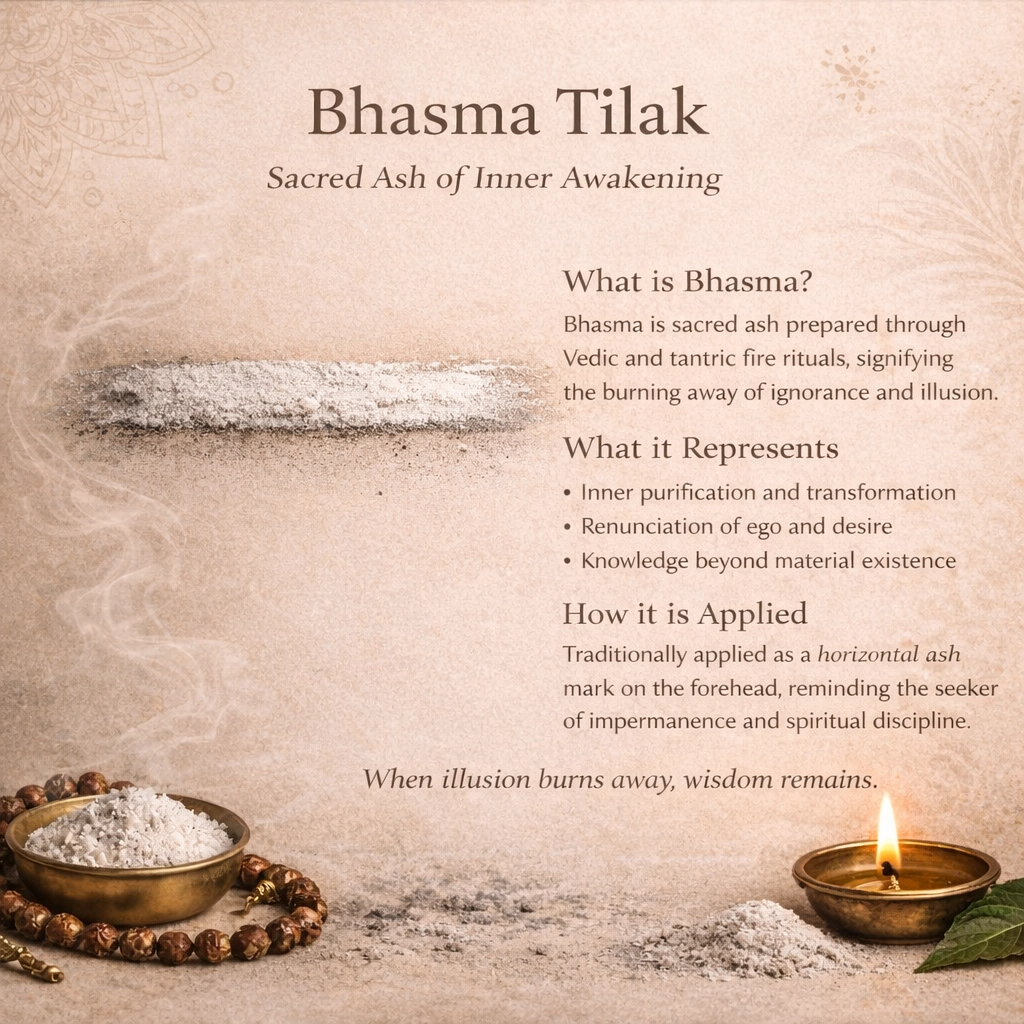
Though often confused with vibhuti, bhasma tilak has deeper roots in Vedic and Tantric practices. The ash used here is prepared through specific fire rituals and mantra chanting.
Bhasma tilak symbolizes the burning of ignorance through knowledge and spiritual discipline. It reflects mastery over desires, fear, and attachment. Traditionally, it is worn by yogis, ascetics, and serious spiritual seekers.
Rather than symbolizing death, bhasma represents inner transformation and awakening after destruction of false identity.
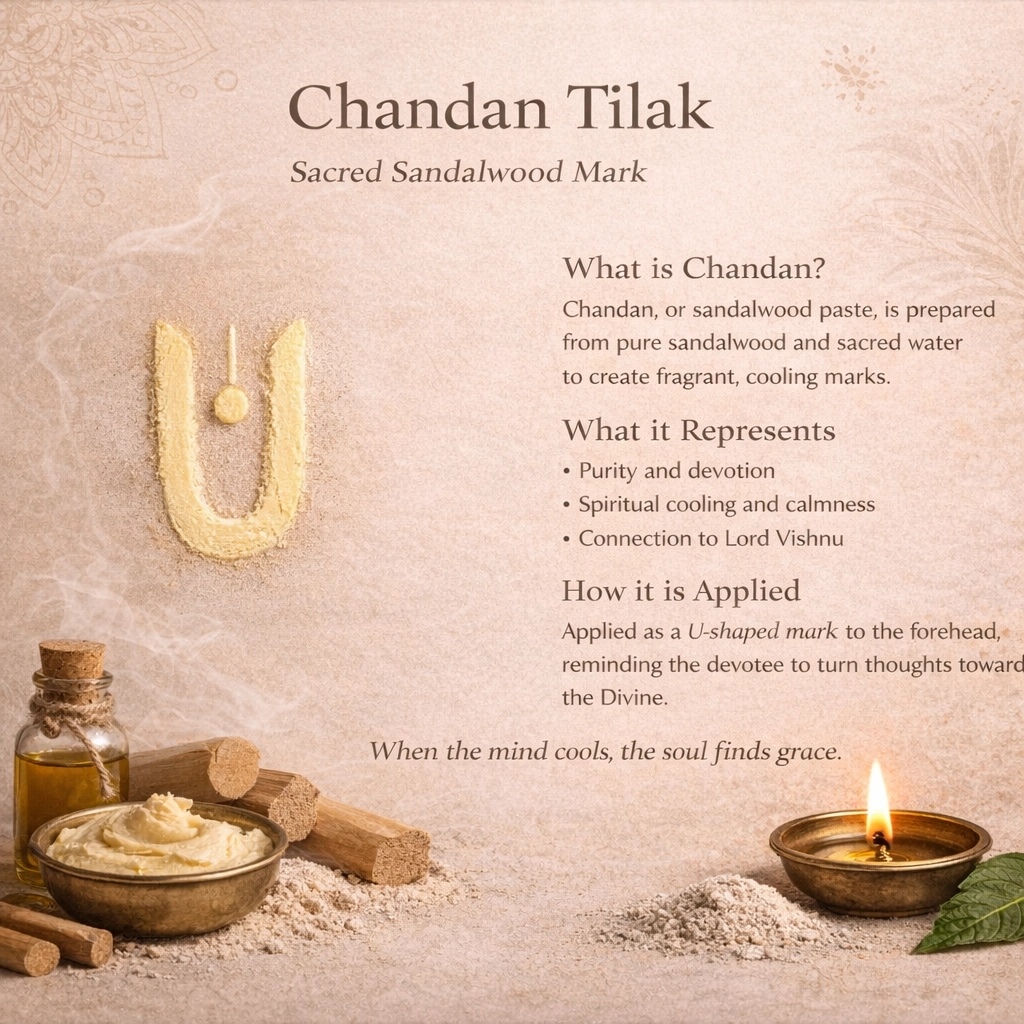
3. Chandan Tilak – Calmness and Devotional Purity
Chandan (sandalwood paste) is known for its cooling nature and soothing fragrance. It is widely used in Vaishnava traditions, especially by devotees of Vishnu, Rama, and Krishna.
Chandan tilak represents peace, purity, and emotional balance. It reflects devotion rooted in love, humility, and surrender rather than fear or austerity. Because sandalwood cools both body and mind, it symbolizes control over anger, restlessness, and ego—qualities essential for the path of bhakti (devotion).
4. Kumkum Tilak – Energy of Shakti and Auspicious Power
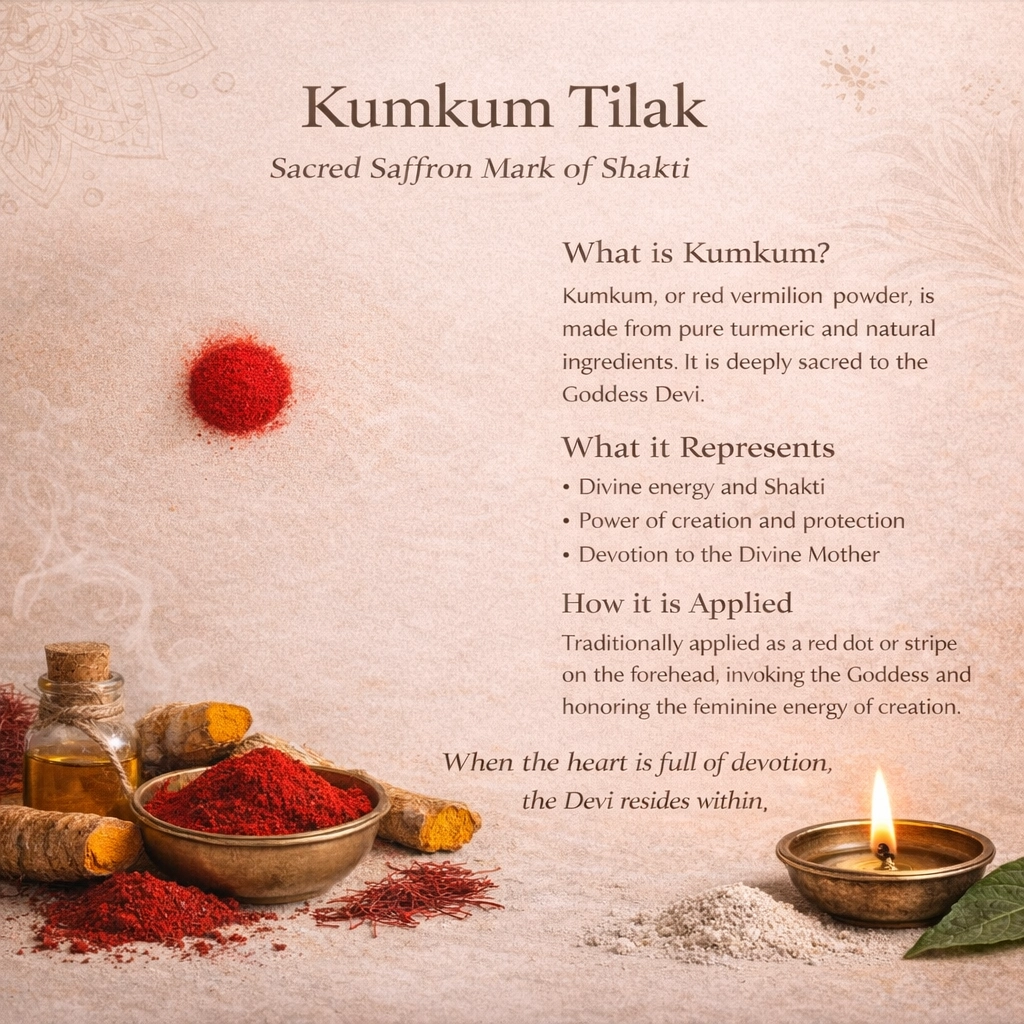
Kumkum, traditionally prepared using turmeric and natural minerals, is red in color and deeply connected with Shakta traditions.
Kumkum tilak symbolizes Shakti, the cosmic feminine energy responsible for creation, growth, and protection. It represents prosperity, vitality, and auspiciousness.
Red signifies life force and continuous movement. This is why kumkum is commonly applied during festivals, rituals, and important life events, marking positive beginnings and spiritual protection.
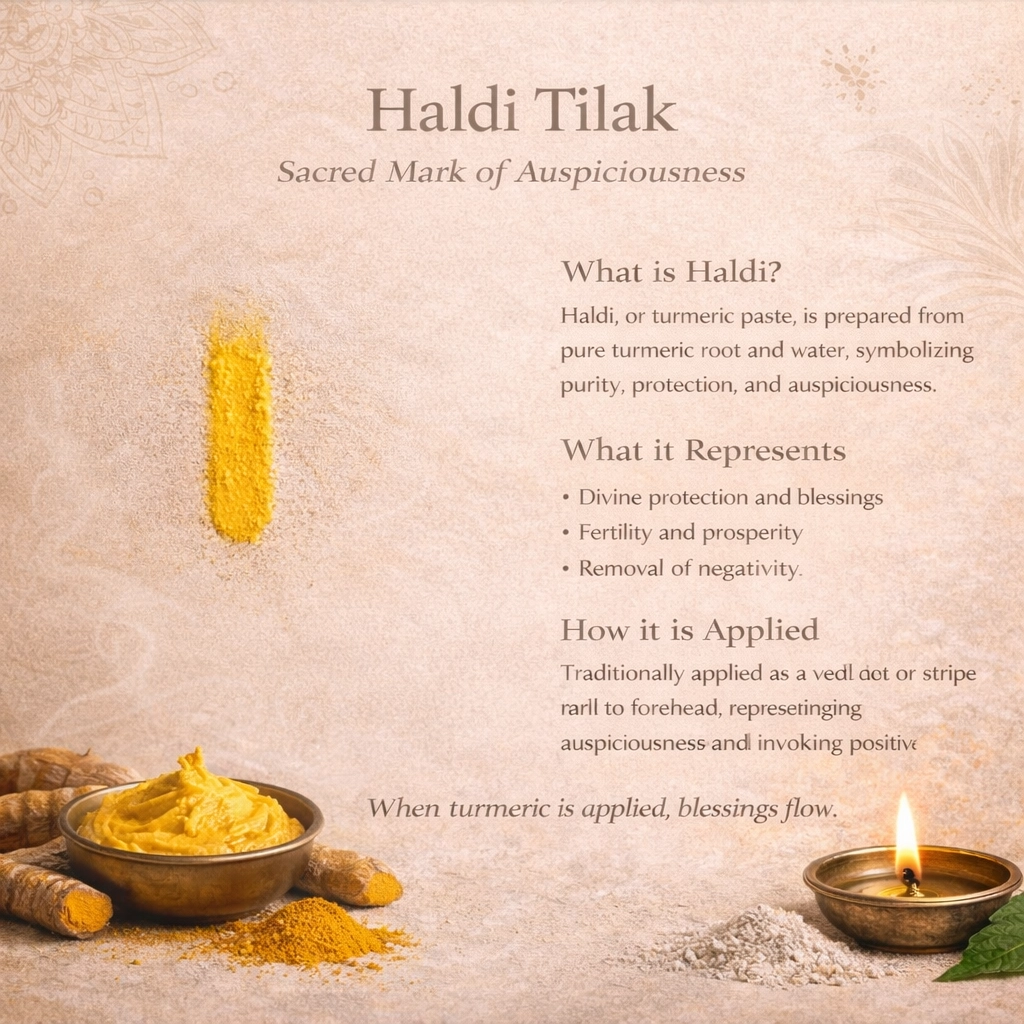
5. Haldi Tilak – Purification and Sacred Beginnings
Haldi (turmeric) is one of the oldest sacred substances used in Sanatan Dharma. Haldi tilak is commonly applied during auspicious ceremonies, household rituals, and weddings.
It symbolizes purification of body and mind, protection from negative influences, and blessings for health and harmony. Turmeric’s natural antiseptic quality also reflects cleansing at both physical and spiritual levels.
Haldi tilak represents simplicity, sacred intention, and positive energy, especially in daily life and family traditions.
Why Material Matters in Tilak
In Sanatan Dharma, symbolism is never random. The material of a tilak:
- Reflects a devotee’s spiritual path
- Influences mental and energetic balance
- Acts as a daily reminder of inner values
Tilak is not imposed by scripture. It is an expression of personal faith and awareness.

